Month: May 2022

Telephonic Youth at Science and Engineering Day 2022

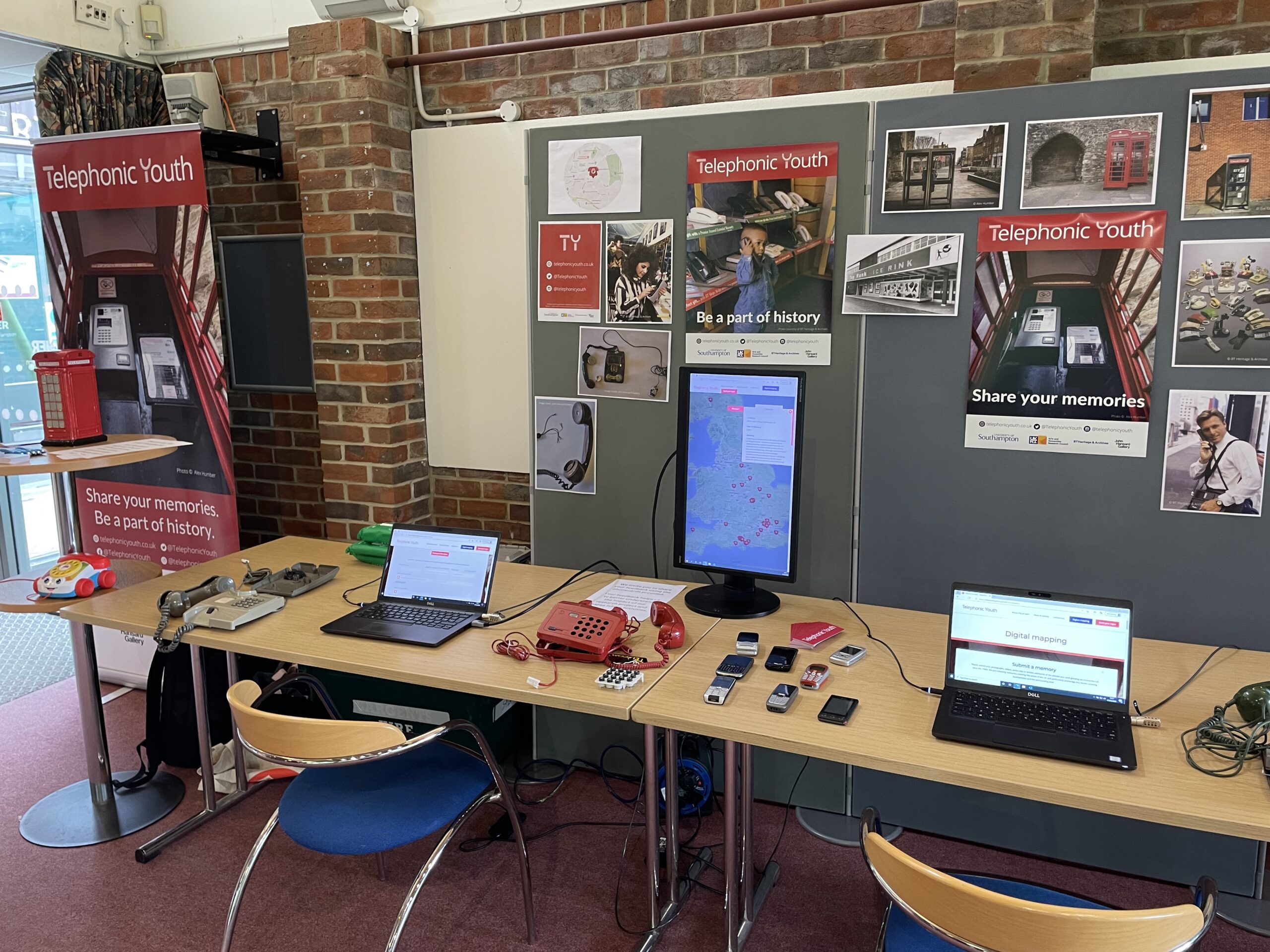
Two laptops, three disassembled landline telephones, and eight mobile phones laid out on two tables. In the background are various posters from BT or places Southampton

On 7 May, the Telephonic Youth team took part in our second SOTSEF 2022 event (after our Community Takeover at John Hansard Gallery), the University of Southampton’s Science and Engineering Day. Following on from our stand at Hands On Humanities Day in November 2021 and pop-ups at libraries throughout Southampton in February and March 2022, we once  again set up shop with our old, disassembled telephones and laptops to gather visitors’ memories.

Although, this time we had even more phones:  a set of mobile phones from the 2000s (liberated from a family member’s garage) and a Fisher Price rotary telephone toy. We were also supported, once again, by two wonderful University of Southampton History students, who gave up their Saturday to help us out and (we hope) get a chance to see community history in action.

A rotary telephone toy with eyes, a mouth and wheels.

Our toy phone

We knew that the old, disassembled telephones would be interesting objects for younger visitors. Many do not have landline telephones at home, let alone rotary phones, and enjoyed working out how to put them back together and – had we had the means to plug them in – make a phone call. What I, in particular, was less prepared for was how alien some of the older mobile phones would be.

Some of them had black and white only screens and no cameras while others didn’t have the ability to connect to the internet. The basic hallmarks of design were also fundamentally different: much smaller screens and many more buttons; one of them flipped shut while the other slid to conceal the buttons. The way that phones have changed over time was brought home by a comment from one young visitor who picked up a phone that I (a 31-year-old man) had owned brand-new as a teenager: ‘this must be 100 years old!’

But this post isn’t about me. Throughout the day, the team had lots of conversations with visitors about their memories of using the phone while growing up. Visitors kindly submitted these to our online map and we’ll also continue to share their stories via our social media. The sheer variety of memories which are shared with us is always heartening and really illustrates the many different ways in which children and young people acted as telephone users during our period of study.

Some people remembered vividly their parents and grandparents using bakelite phones and being made to answer calls in a certain way, whether listing the telephone number or the family name. Others remembered calling friends and ‘hoping that no-one picked up the other phone and listened in’ (Bishopstoke, Eastleigh, 1988).

SOTSEF was a wonderful opportunity to speak to people living in and around Southampton about their memories, and the team would like to thank our colleagues in PERu for all their hard work in organising the event. We’re still collecting memories of using the telephone while growing up anywhere in the UK from the 1980s onwards. We’d love it if you could share your memories too through our website.
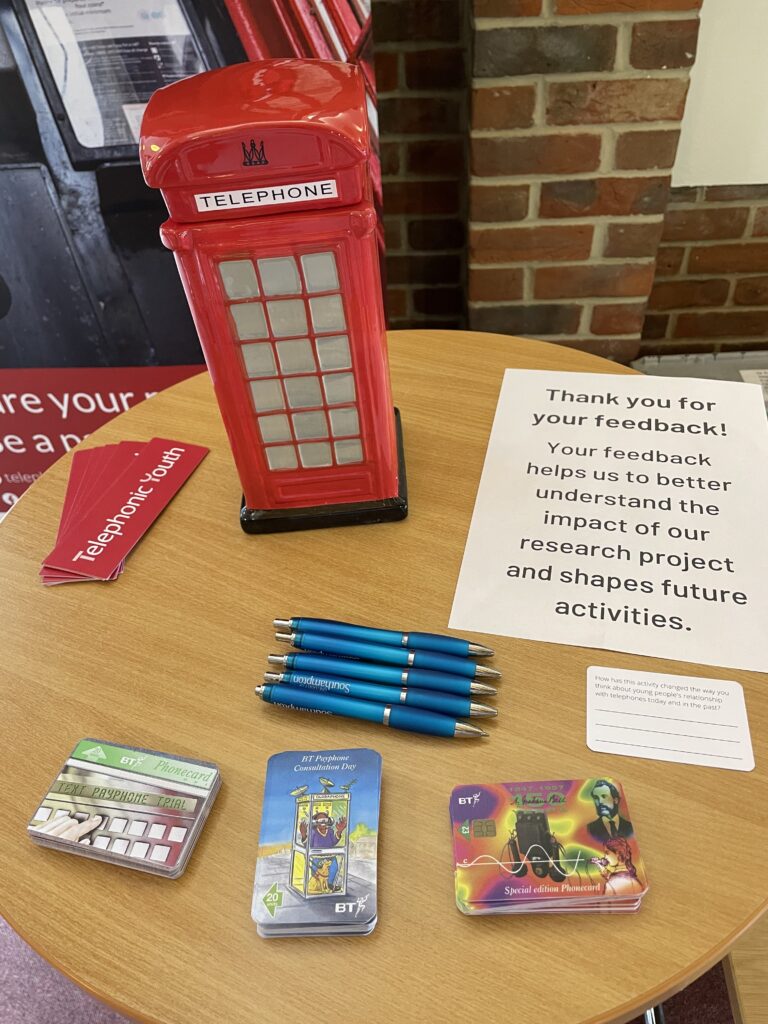
A red phone box-shaped cookie jar and set of replica phonecards on a circular table with a sign requesting feedback

The replica BT phonecards (courtesy of BT Heritage & Archives) and cookie jar we used to collect feedback
Community art exhibition foregrounds new youth voices in research

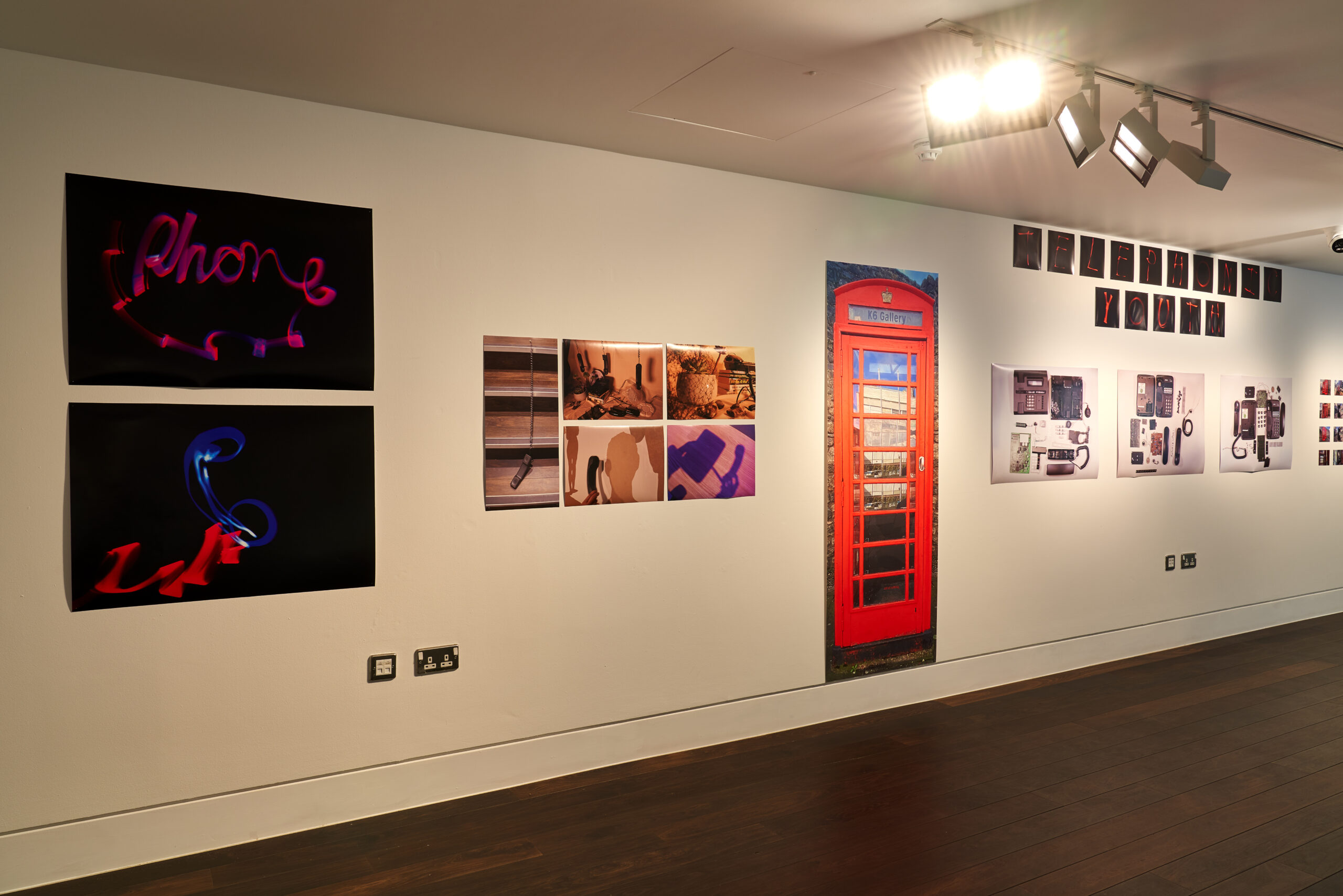
A series of photographs on a white gallery wall. The photos include the word 'phone' created using light, a large portrait image of a red telephone box, and a series of photos of disassembled telephones.

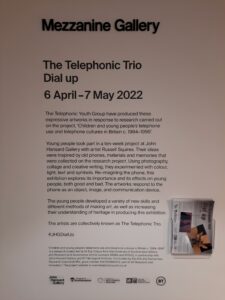
We were incredibly proud to see the first of our two community art exhibitions launched in Southampton at the start of April 2022. Dial up featured the artwork of a group of young people based in Southampton and reimagined the phone as an object, image and communication device and its effects on young people.

Image of text describing the exhibition at John Hansard Gallery. Underneath the text are the logos of the gallery, Southampton university, the AHRC, Arts Council England, and BT.

Description of the exhibition and accompanying materials.

The exhibition was the result of interpretative work undertaken by the group as part of Telephonic Youth’s collaboration with John Hansard Gallery. Beginning in November 2021, the young people worked with artist Russell Squires in a series of workshops over five months in which they responded to materials and themes from our research.

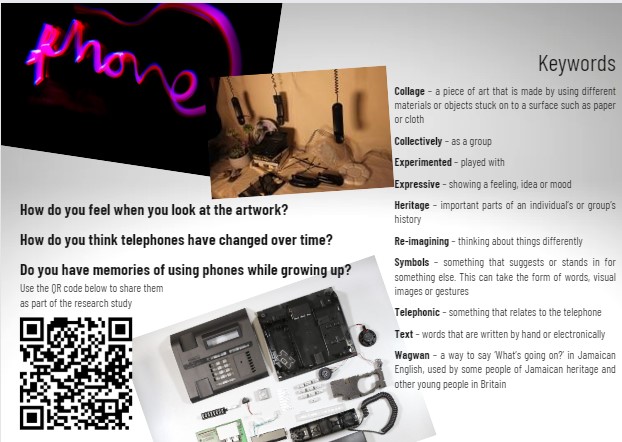
The young artists, known as The Telephonic Trio, experimented with a range of photographic styles. Inspired by Todd McLellan’s Things Come Apart series, they took photographs of the parts of disassembled landline telephones. They also drew on the traditions of vanitas still life artworks which used symbolic objects to remind the viewer of their mortality. Playing with this genre, The Telephonic Trio created atmospheric photographs that centred the phone.

The Telephonic Trio’s work spoke to the iconography of the 1980s and 1990s – our historical era – in playful ways. In their light painting photographs, the artists created colourful representations of the telephone number pad that were inspired by the neon colours in advertisements for phone chat lines found in teenage magazines of the late 1980s. In a nod to the zine culture of the 1990s, they created zines reflecting on varied associations of young people’s phone use, drawing on materials from BT Heritage & Archives’ collection, ephemera and creative writing.

Dial up has made a wonderful contribution to our research project and the questions we are asking. Moving between the imagery and the language of the telephone, it explores shifts and connections between young people’s phone use past and present. There are ways in which this is a distinctively Southampton show: all of the artworks were created in the city’s John Hansard Gallery or city centre by young Sotonians. But the show also points to the scales of connection and influence far beyond the city itself. Notably, The Telephonic Trio referenced the influence of Jamaican patois on the way young people from different cultural backgrounds in Britain speak on the phone today. Through this, Dial up presented a global story of contemporary youth culture.

Part of the exhibition guide. Includes some photos from the exhibition, questions, a QR code to contribute to the research project, and a list of keywords.

Exhibition keywords.

Dial up was on display in John Hansard Gallery from 6 April until 7 May 2022. Some of The Telephonic Trio’s photography is also reproduced in our second community exhibition, Thinking inside the box, in K6 Gallery (located in the two red telephone boxes on Castle Way, Southampton), which is on show from 6 April until 10 July 2022.

Featured image: Photograph of Dial up at John Hansard Gallery by Reece Straw.