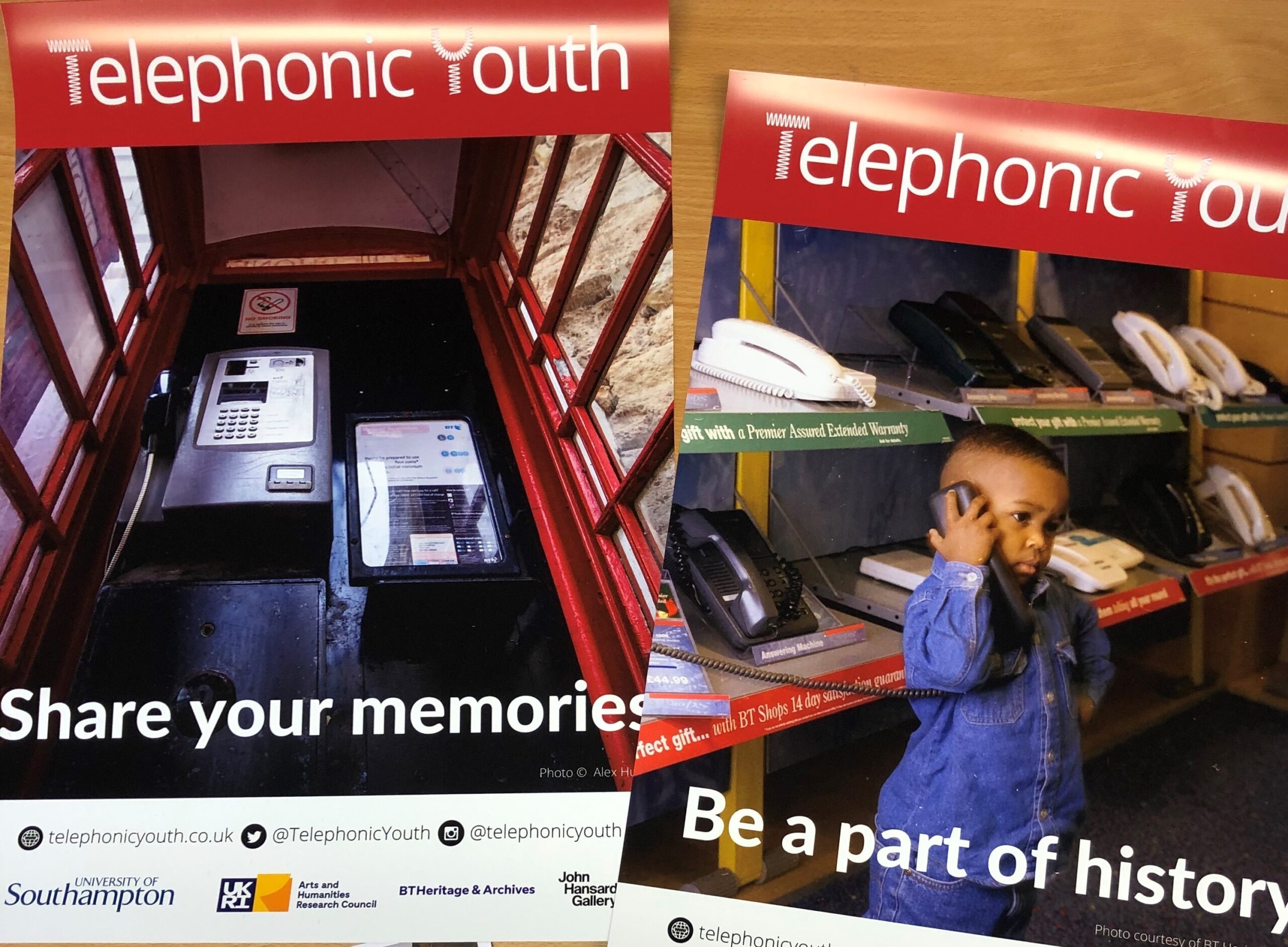
Telephonic Youth at Hands-On Humanities Day 2021
Saturday 20 November was a great day for the Telephonic Youth team! With the help of two of Southampton university’s fantastic History undergraduate students, we spent the day speaking to members of the public in person about their memories of using the phone while growing up in Britain from the 1980s to the present. You can read their stories on our map.
Hands-On Humanities Day
Hands-On Humanities Day is an annual event organised by the Public Engagement with Research unit here at the University of Southampton. Part of the national Being Human Festival and the university’s own Southampton Arts and Humanities Festival, it is a celebration of research and a great opportunity to meet members of the public (masked)face-to-(masked)face.
As a project which puts your stories at the heart of our research, we are incredibly grateful to Silvia, Emma, Lou, Jo, Steve, Bethany and Connie for everything they did to make the day possible—and to all of the student ambassadors for their hard work throughout.
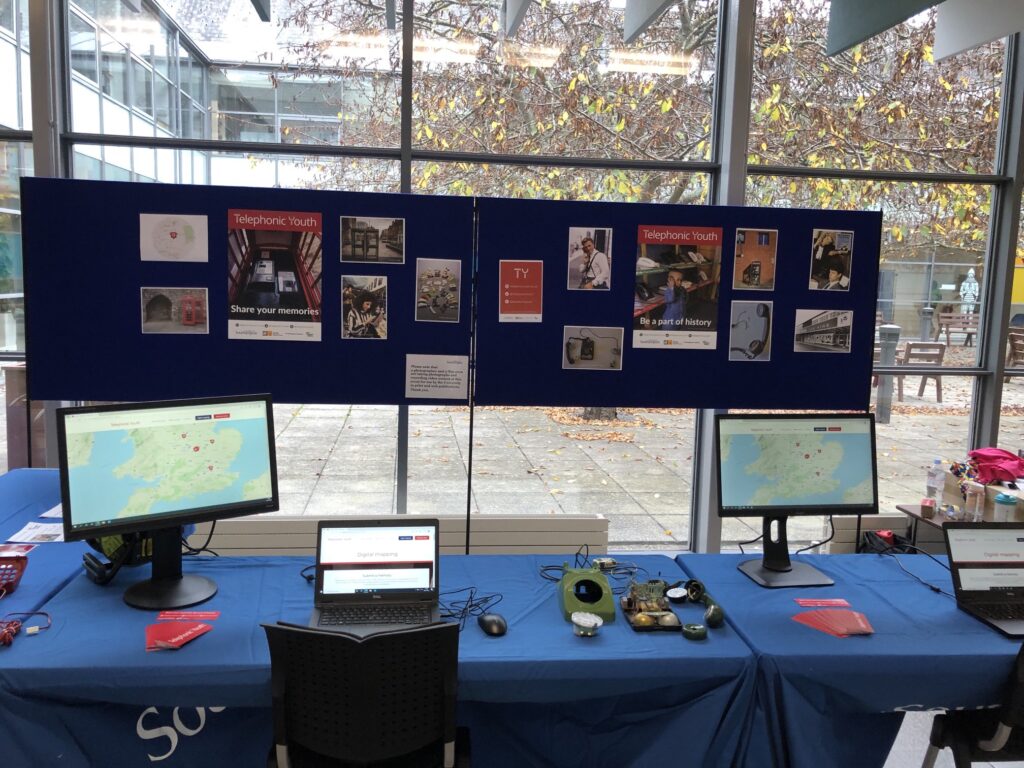
The Telephonic Youth stall at Hands-On Humanities Day 2021
The Telephonic Youth team spent the day at our stall, speaking to passers-by about their memories. And it was certainly hands-on. While we were speaking to adults about their memories (all of our participants need to be over the age of 16), a raft of budding engineers—and, hopefully, more than a few future historians—set about trying to reconstruct some old telephones kindly lent to us by our friends at BT Heritage & Archives, and which have frequently featured in our Space To Create events at John Hansard Gallery.
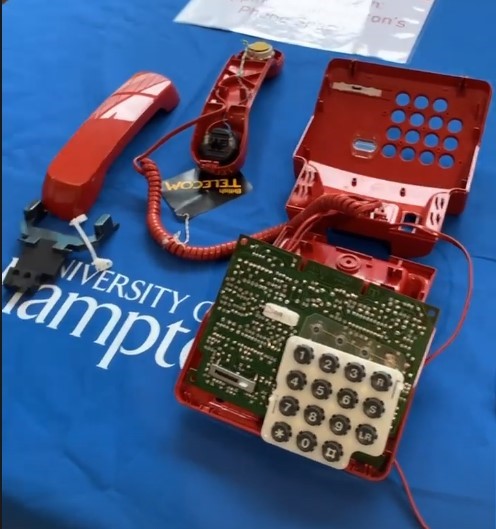
One of our disassembled telephones
It was amazing to see both how much the technology changed during the 1980s and 1990s, as rotary dials increasingly gave way to buttons and phones began to integrate digital technologies, but also the speed at which our young visitors were able to re-assemble them—no mean feat when the pieces are designed to fit together snugly and there are no instructions.
Your memories
The memories shared with us during the day showcased the many different ways that phones are integrated into our daily lives—and how important they were to us when growing up.
There were many memories of shared telephones—whether these were with family, friends, or neighbours in the form of a party line.
I lived with a family’s friend flat and she had a phone that was located very near her TV. Whenever the phone rang (dring dring dring) would she be upstairs, she will run down the stairs at speed and lift up the handset as quick as she could so she didn’t miss the caller.
(Barking, London, 2004)
Phone calls were expensive—especially for young people who didn’t always have change for a pay phone.
I remember using telephone boxes, these were used to tell my parents what time I’d be home. You could to do a return call where you would be connected to the other line. Just before you were connected, the operator would say to your parent, you have a call from ….. would you like me to connect you. The parent would be charged, but I’d say, “mum call me back”, and put the phone down. My mum would call back and it would not cost me or my mum anything. I had no money so it was only method I had to contact my mum if I was out and about.
(Lewisham, London, 1994)
As a team of historians, we’re interested in hearing your stories about growing up, using the phone, and what these can tell us about the histories of childhood and youth culture in late twentieth-century Britain. But another one of the memories shared with us also highlights the importance of technology as a means of staying in touch with loved ones—even under the most difficult of circumstances.
Over the pandemic our reliance on phones and telecommunications sky rocketed as they became our only bridge to our friends, family and outside world while being isolated. Before the lockdown I never really used my phone or appreciated how much smaller it makes the world and the ability to talk with different people no matter their world locations or the time.
(Highcliffe, Dorset, 2020)
There are many more stories which you can explore on our digital map—and don’t forget to add your own!